Piercing the Curtain, 2021

Piercing the Curtain, 2021

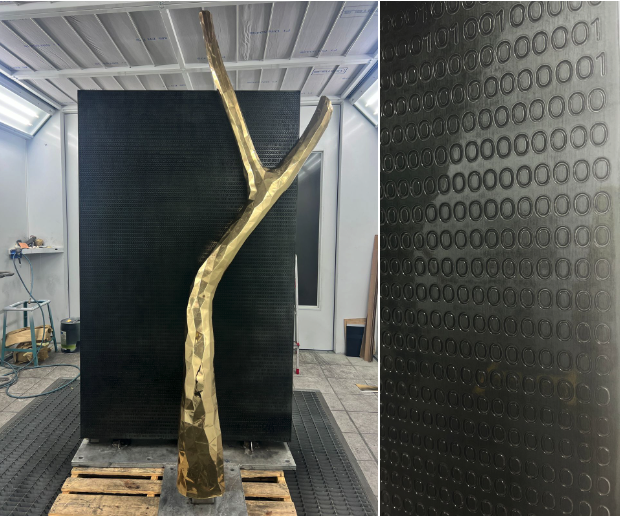
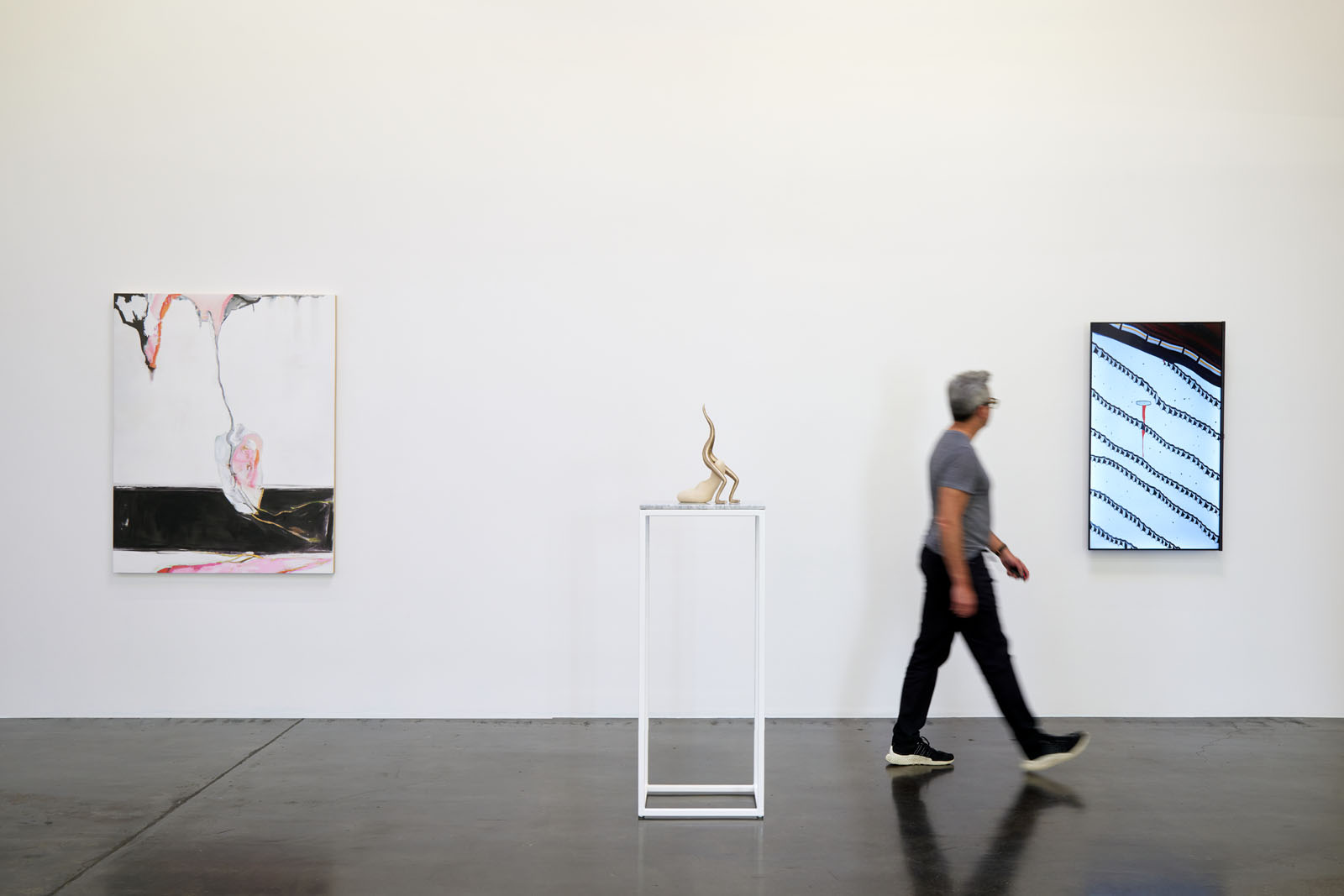
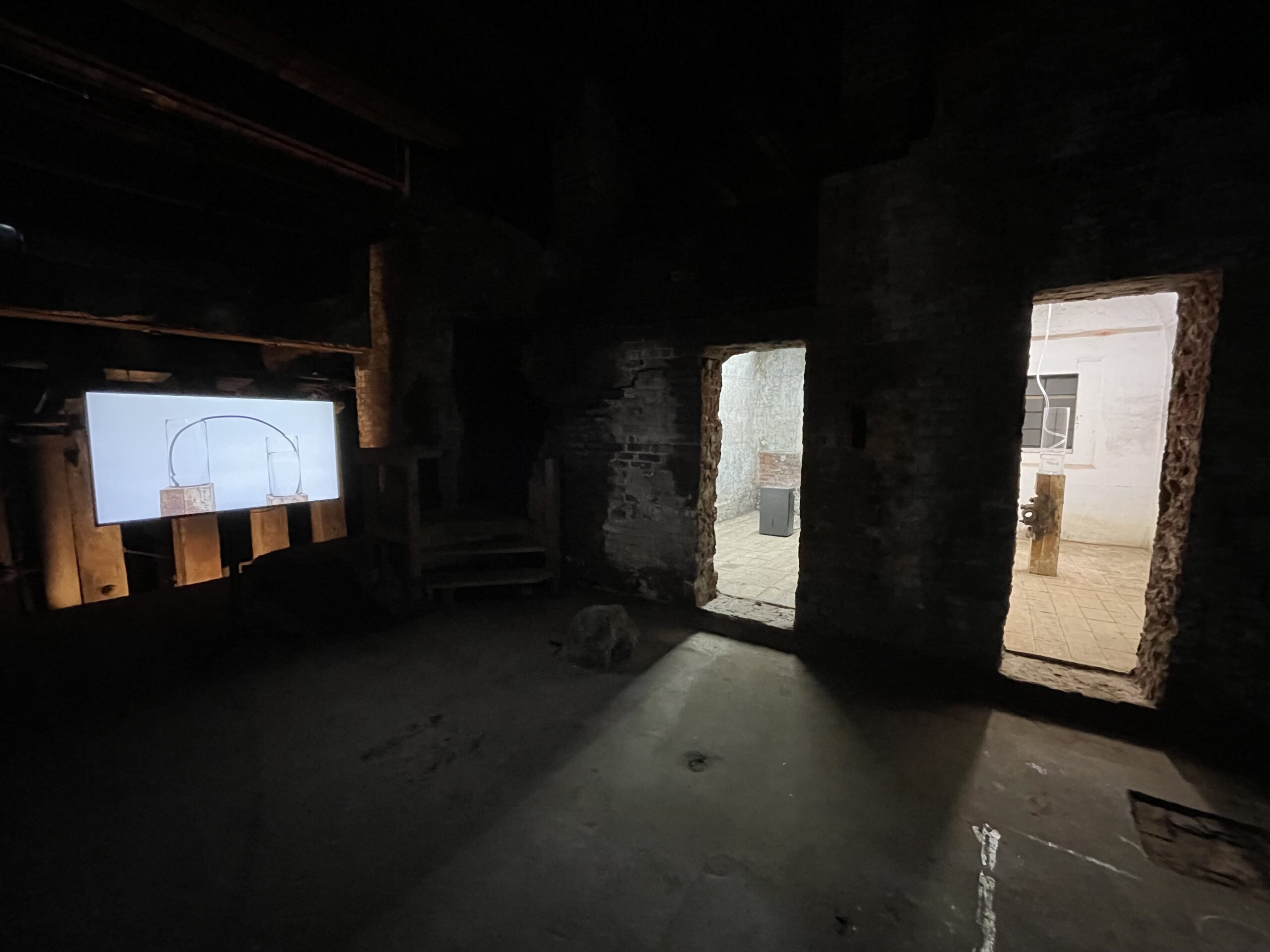
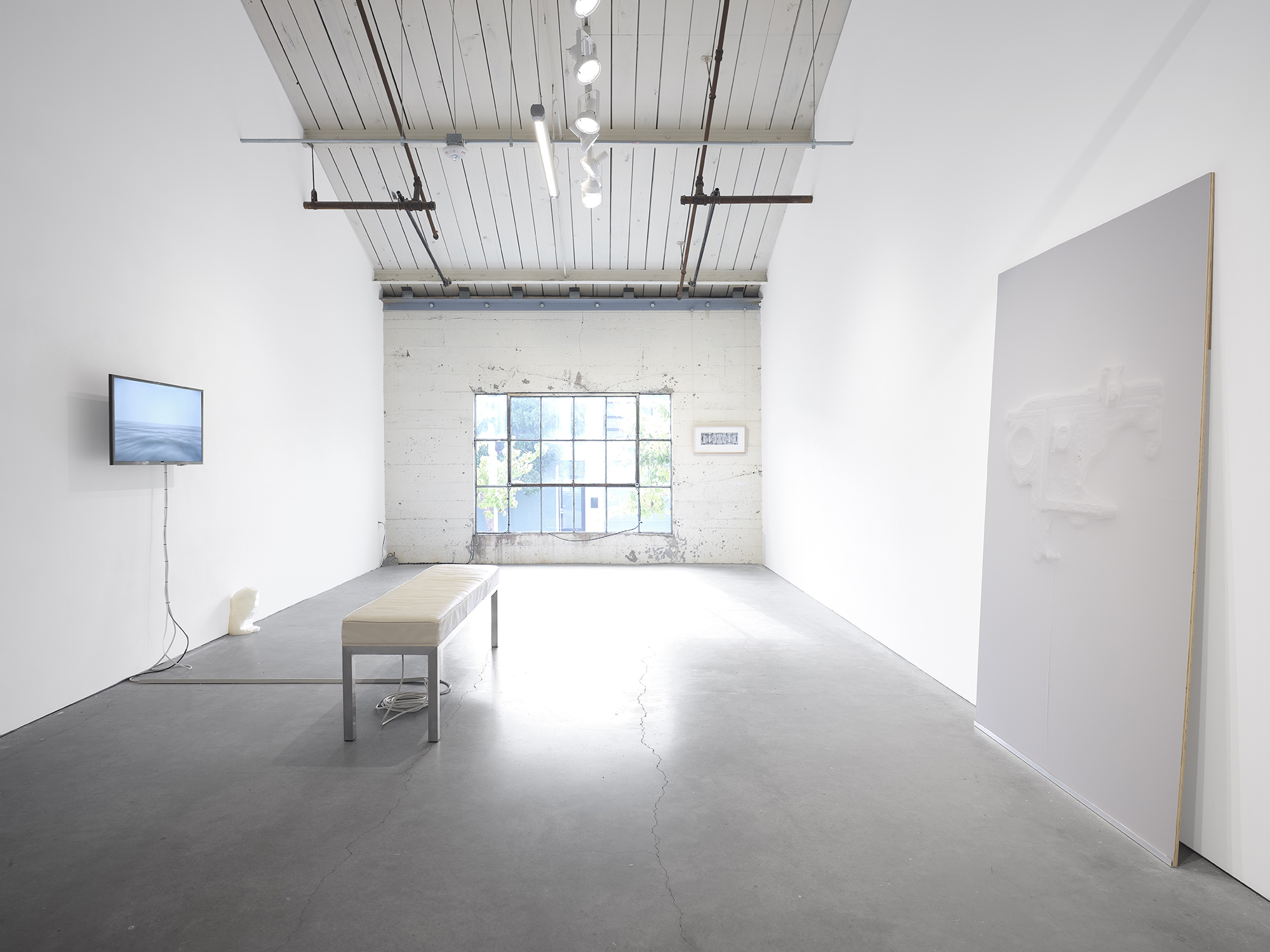
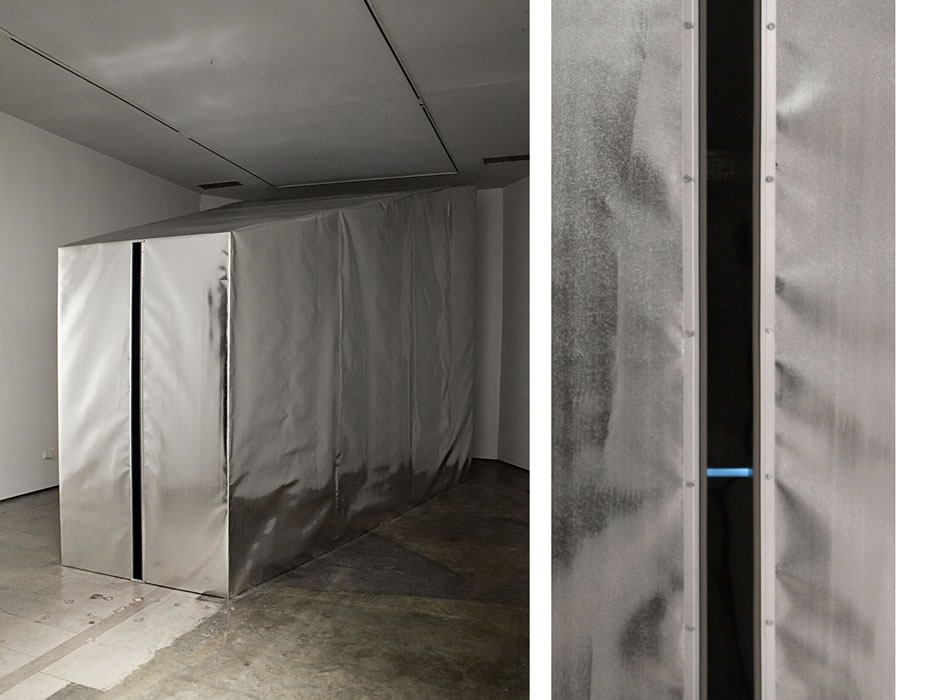
Multimedia Installation. Simultaneously installed at La Beque Artists Residency (Switzerland) & Bass & Reiner (San Francisco), 2021

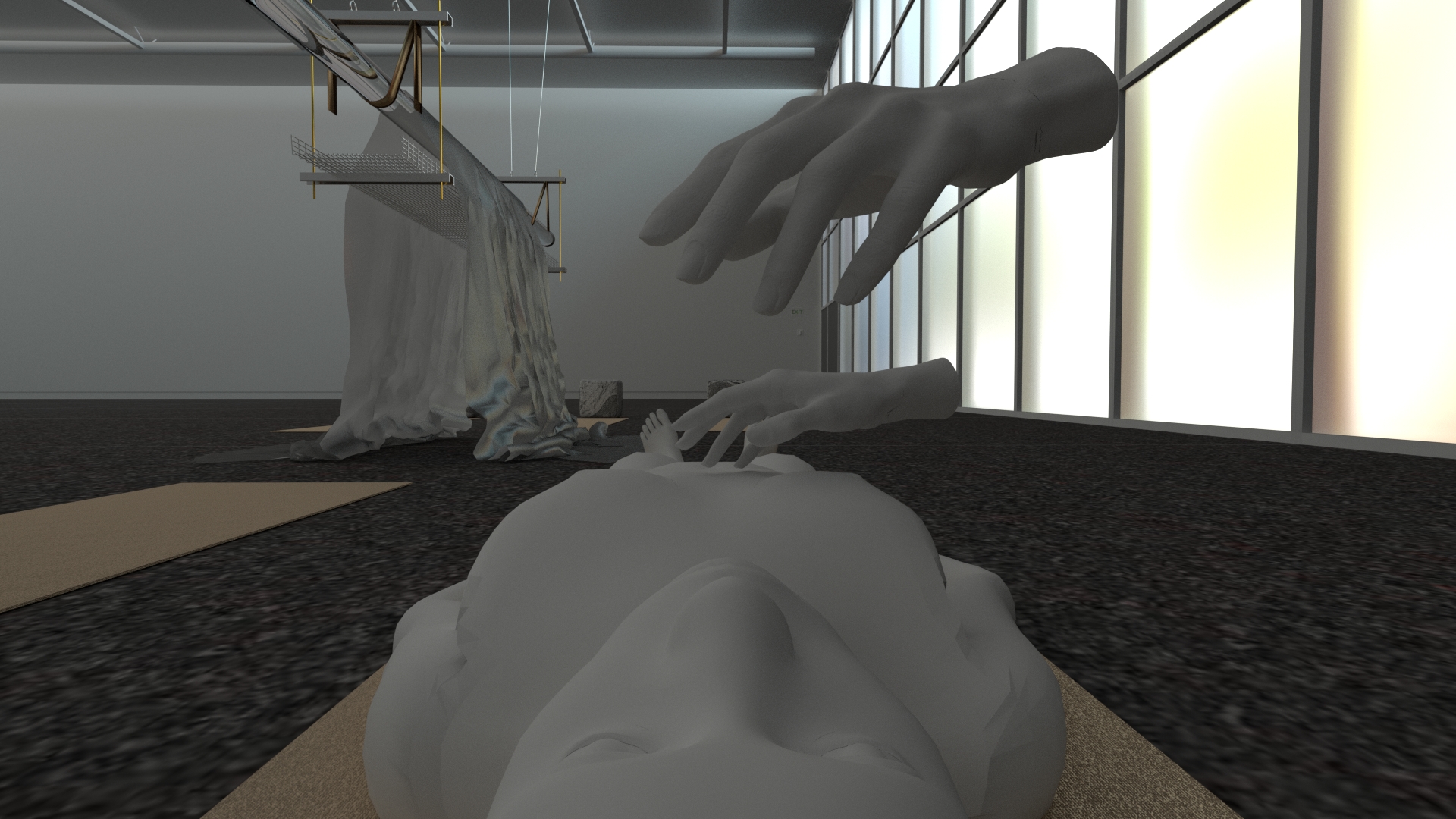
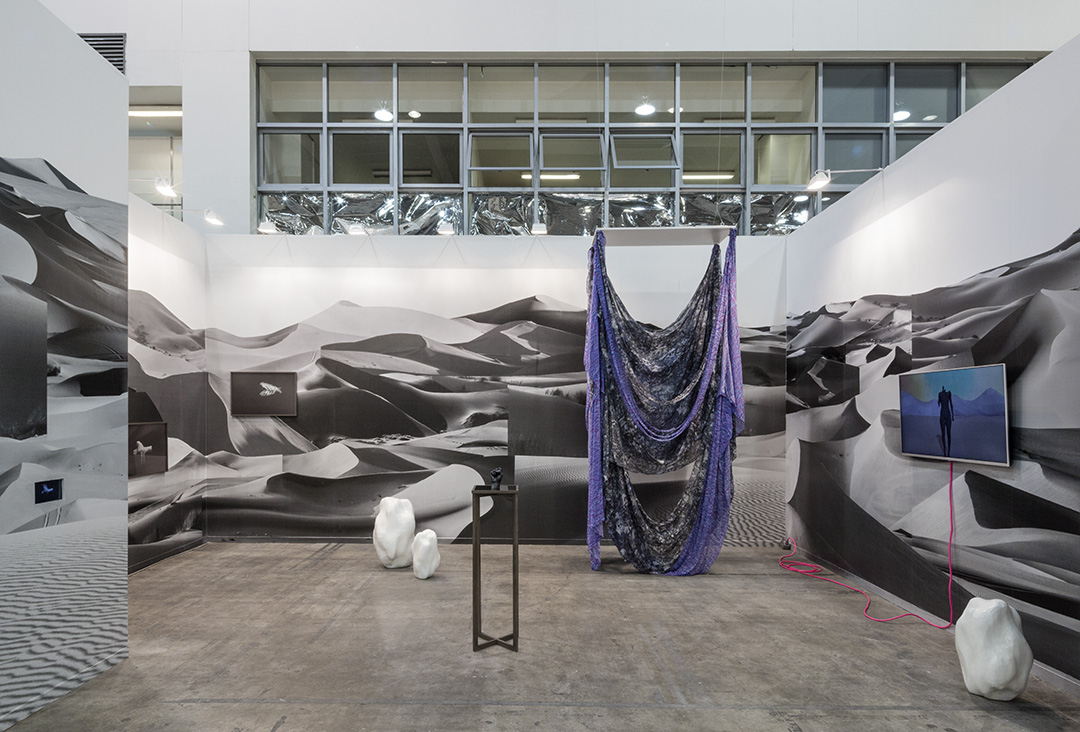
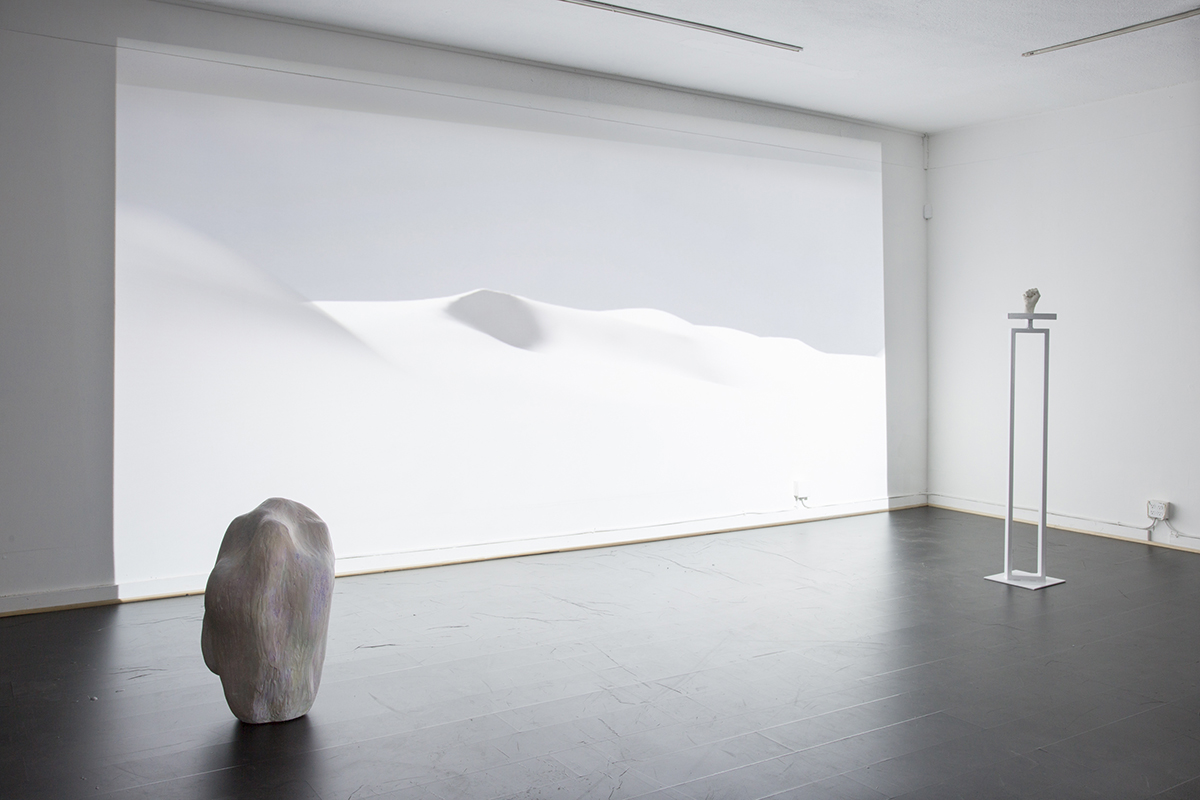
Piercing the Curtain features works produced by Bruno Aeberli and Rhonda Holberton as part of an experimental curatorial project, Binominale,  in which artist pairs from different countries exchange instructions on how to recreate or re-perform each other’s artworks remotely. The works evolved over a 4 month period of remote correspondence between the two artists.

Piercing the Curtain, 2021

COLD STORAGE, 2015

COLD STORAGE, 2015

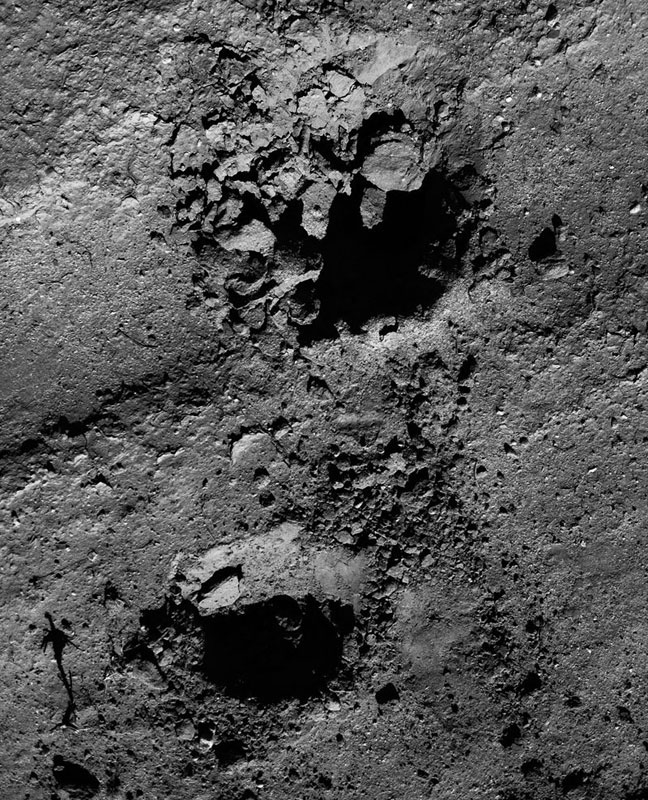
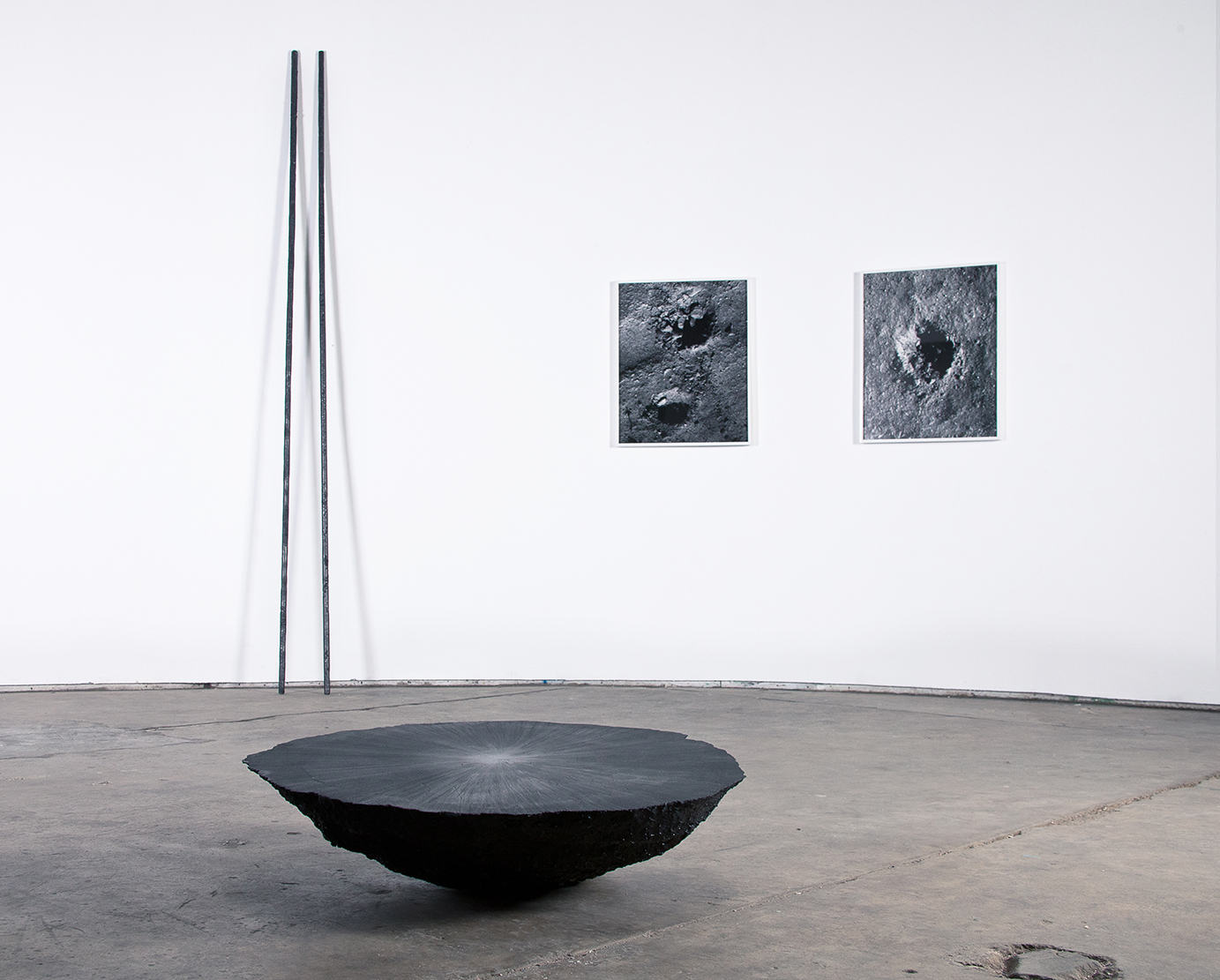
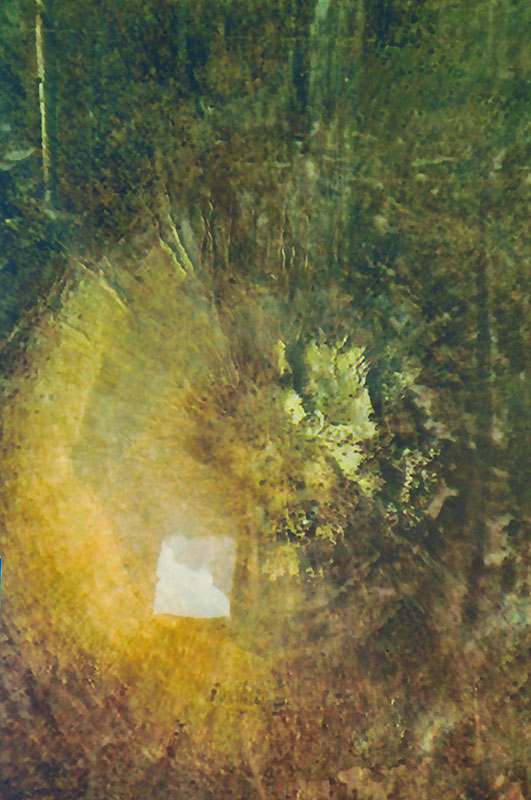
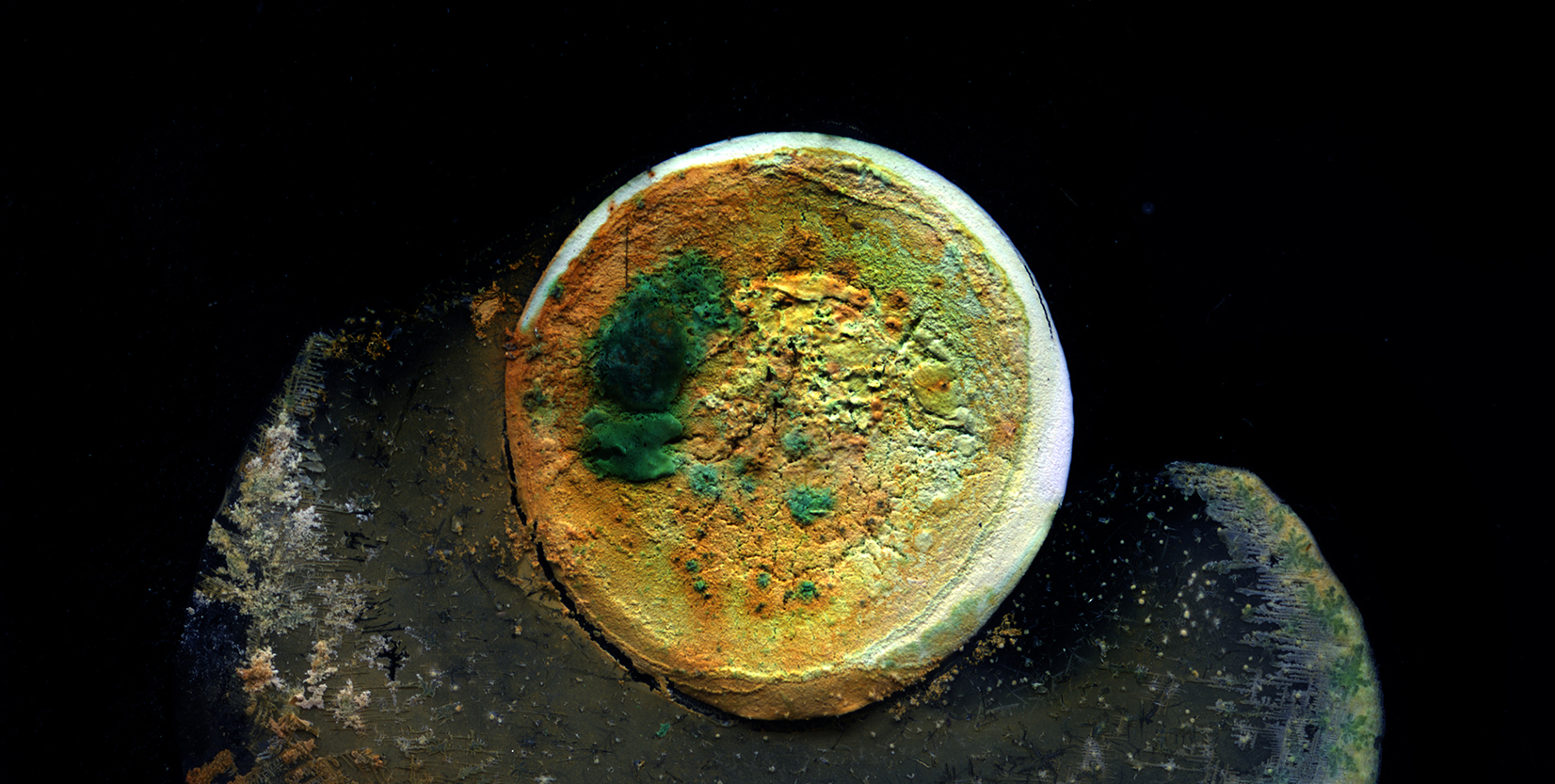
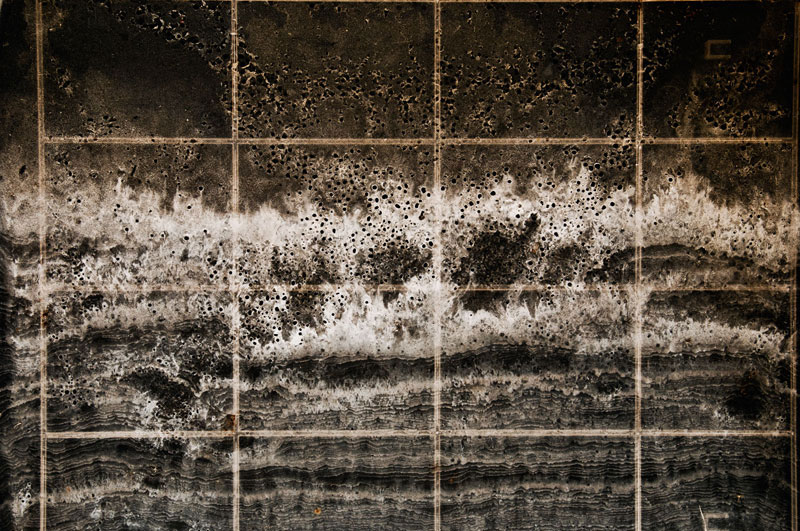
The works in the installation pivot around two poles. The first is the collapse of the biological human into geologic time. The second, is the notion of the ghost in the machine. Not in the sense of the anthropomorphism of the machine, but more closely related to Tom McCarthy’s argument that new technologies provide the dangerous illusion of frozen time, denying the inevitable passage toward illness, death, and decay. This freezing of time within virtual space is completely incongruous with the passing of time on the other side of the screen. The works navigate the sliver of space between the retinae and the screen – the portal between fantasy and reality. I wonder what will happen when that sliver expands as the displays become more integrated and transparent in our experience of the physical world.

The work maps out my attempts to reconcile two very different- but equally likely- visions of our future; one where our biology and technology are almost indistinguishable, and the other where the landscape has been pushed to the breaking point so that it can no longer support the techno-human agenda. The video projection, Knights of the Sky, depicts the latter version, where we either return to a kind of dark ages because we’ve burned through all of our subsidized solar energy or disappear completely. While our technology is left to erosion here on earth, our satellites (truly frozen in the vacuum of space) will continue to navigate the galaxy, ghosts from earth.

COLD STORAGE, 2015

The Italian Navigator Has Landed in the New World, 2014

The Italian Navigator Has Landed in the New World, 2014

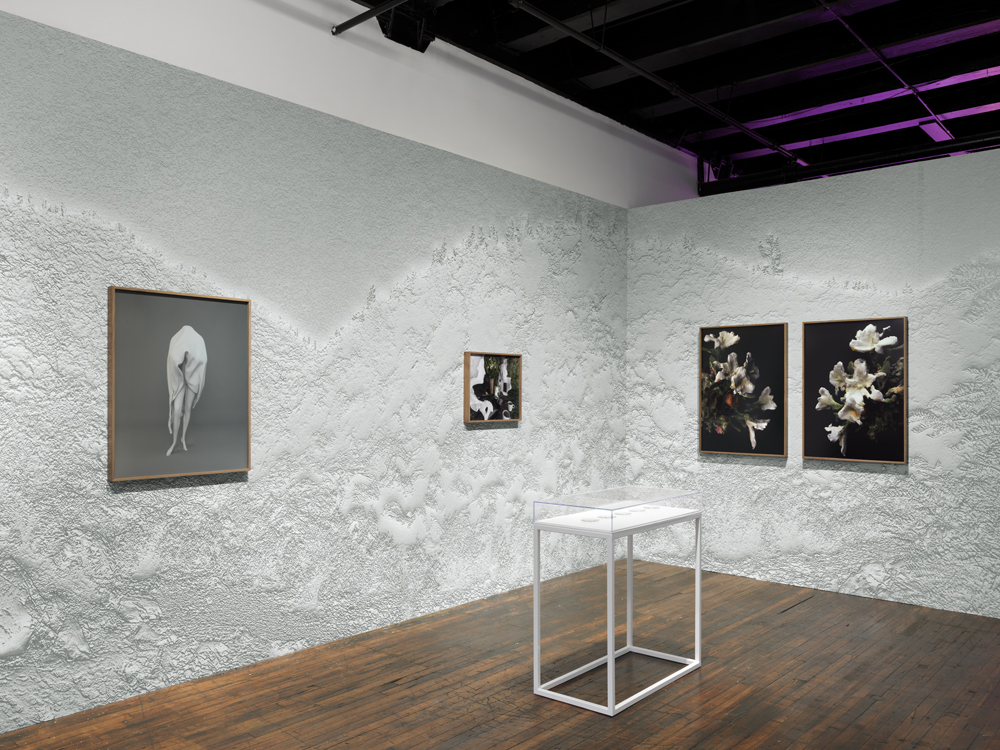
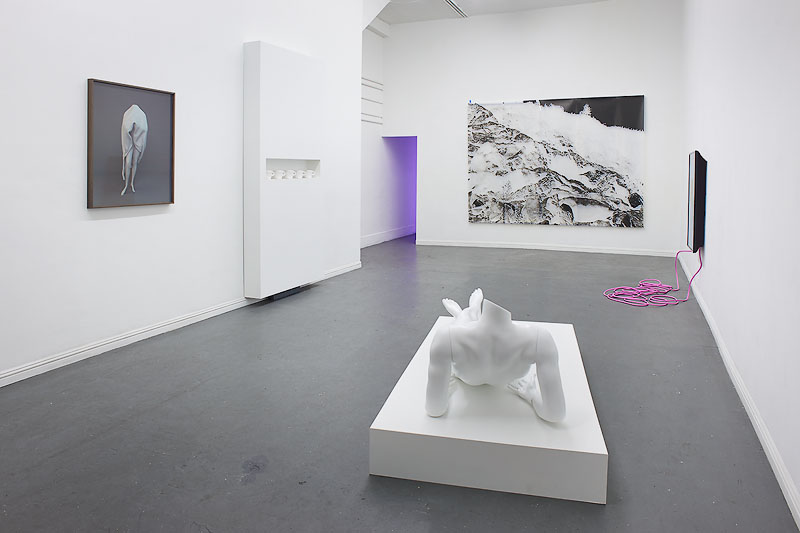
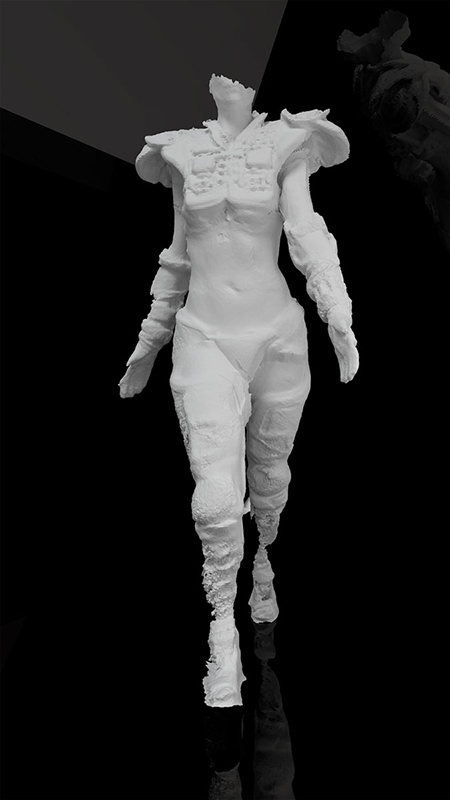
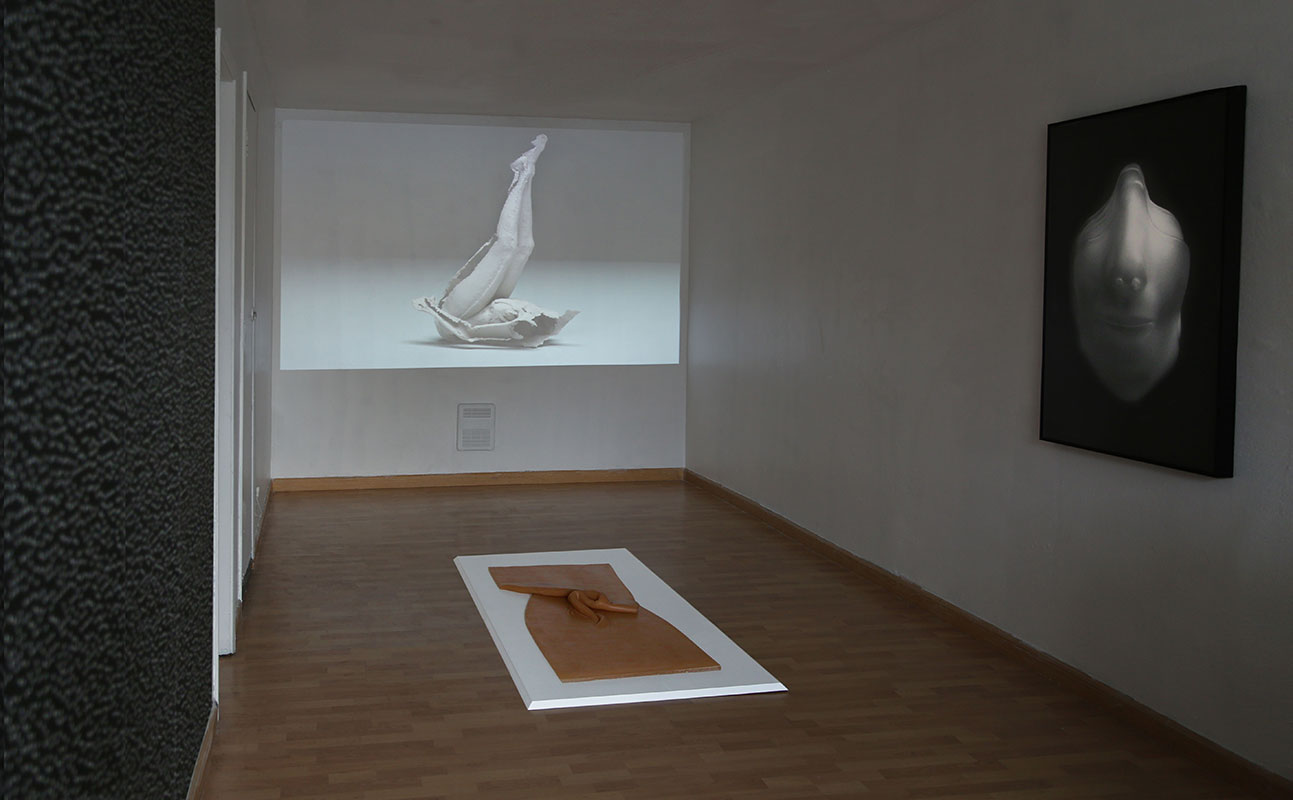
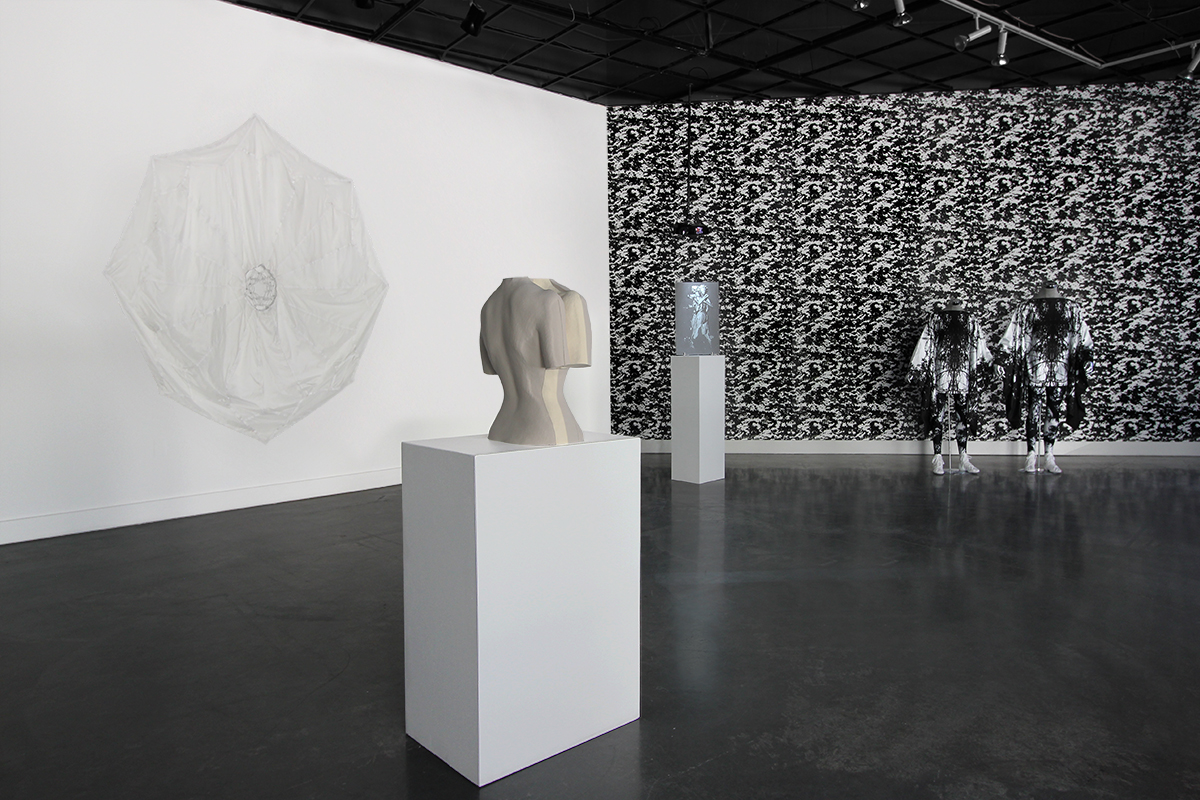
Centered on her ongoing investigations into the politics of technology, the multimedia installation, The Italian Navigator has Landed in the New World, imagines the body as seen by the machine on the other side of the screen. Presented alongside sculptural and photographic representations of the debris left by the biological self, projected skins of the fragmented human form spasm in attempts to reconcile body & mind through breathless movement. The austere aesthetics of digital semantics used in image recognition algorithms appear as a starry night to the poetic prejudice of the human eye. Photographic documents present artifacts of protective barriers that safeguard against the transmittal of contagions between corporeal lips and the inanimate mask of ‘the most kissed face.’ The work pivots around ideas of health and hygiene that mask a general anxiety towards the living body.

The Italian Navigator Has Landed in the New World, 2014

YOU BECAUSE FREE INSTANTLY NEW, 2014

YOU BECAUSE FREE INSTANTLY NEW, 2014

The commissioned installation YOU BECAUSE FREE INSTANTLY NEW (2014) investigates the integration of militaristic technologies and methods into the intimacies of everyday civilian life.

“Like the content it addresses, Holberton’s work is surprisingly subtle and strategic in its execution. The exhibition’s carefully curated objects—flowing ponchos, perfume bottles, and digitally rendered wallpaper—reference our everyday lives with a comfortable familiarity. With time, the initial ease one might feel dissipates as the camouflaged works reveal themselves: video masked as reality, war marketed as fashion, and an installation that brands gallery-goers not as passive recipients of the works’ messages, but rather as active participants, implicated by their very presence in the space.”

-Amanda N. Simons, Review from Daily Serving

YOU BECAUSE FREE INSTANTLY NEW, 2014

Two Otherwise Distant Points

Two Otherwise Distant Points

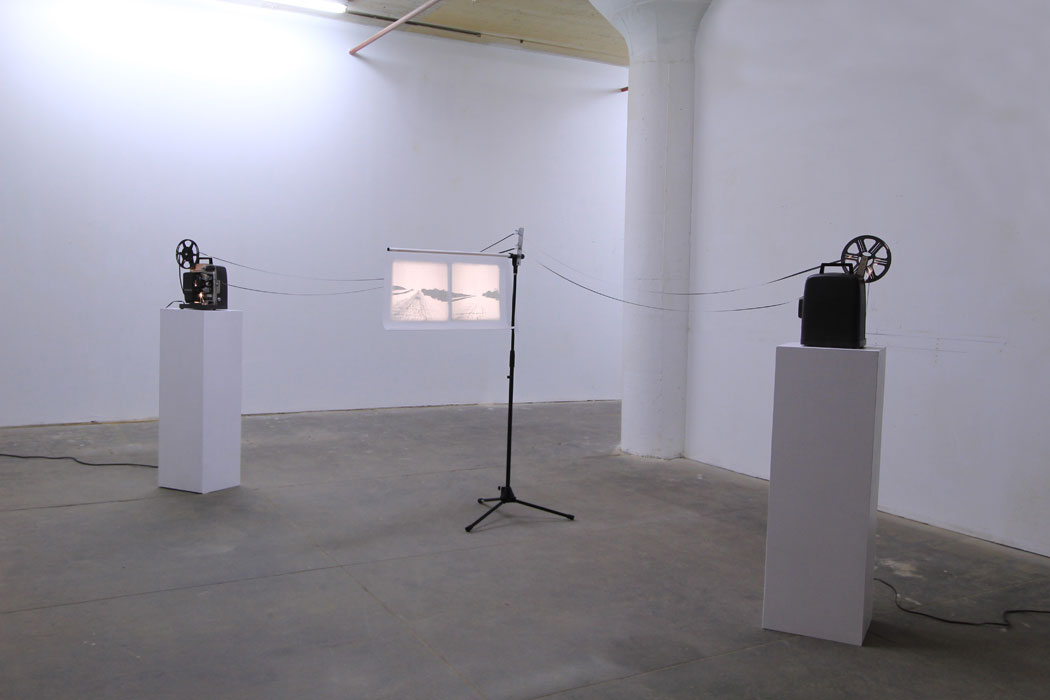
Two 8mm films are spliced together and loop continuously through two projectors facing one another and projecting onto the same sheet of transparent paper. Each film was recorded simultaneously by two cameras facing opposite directions on a very flat road outside an unnamed military base outside 29 palms. My partner stood between the cameras and then walked out to the visible horizon (a predetermined point where we were no longer visible to the naked eye). The films begin from this point, two still landscapes that appear nearly identical. Around the four-minute mark a grey dot begins to appear on the horizon of each frame. The grey mark continues to grow and come into focus and by the 7-minute mark it is clear that the dots are actually two figures walking toward the camera. At the 8-minute mark the two figures disappear as they pass between the cameras; for a moment the landscape is still once again before the two figures emerge on the opposite projection (through the lens of the other camera) and continue to walk away until the figures disappear on the horizon.

Two Otherwise Distant Points

What is there is the Greater Thing (Eighteen and a Half Minute Gap), 2013

What is there is the Greater Thing (Eighteen and a Half Minute Gap), 2013

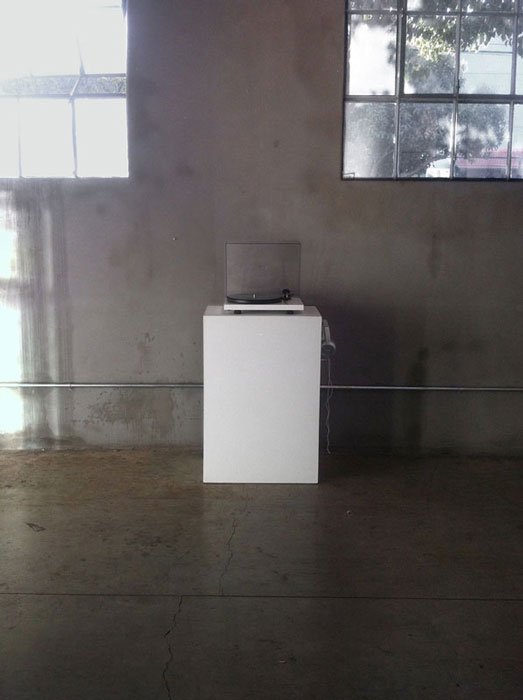
I translated the audio recording of the 18 ½ minute gap from tape 342 of the Nixon White House Tapes into a 33RPM record. The record is made from a sheet of polycarbonate, a material that is highly transparent to visible light. The 18 ½ minutes of erasure is broken into three segments. The first 4 ½ minutes contains a loud buzz followed by approximately 9 minutes of soft buzz, and followed by approximately 5 minutes of Loud Buzz again. Interspersed between some of the erasures are short un-erased segments lasting only seconds each. In the middle of the third erasure the buzz transitions from a loud buzz to a soft buzz. In a technical note from the 1974 Advisory Panel Report on the Tape Gap, the buzz level is attributed to unexplained “transient noise.”

What is there is the Greater Thing (Eighteen and a Half Minute Gap), 2013

The Invention of The Ship Was Also the Invention of the Shipwreck, 2012

The Invention of The Ship Was Also the Invention of the Shipwreck, 2012

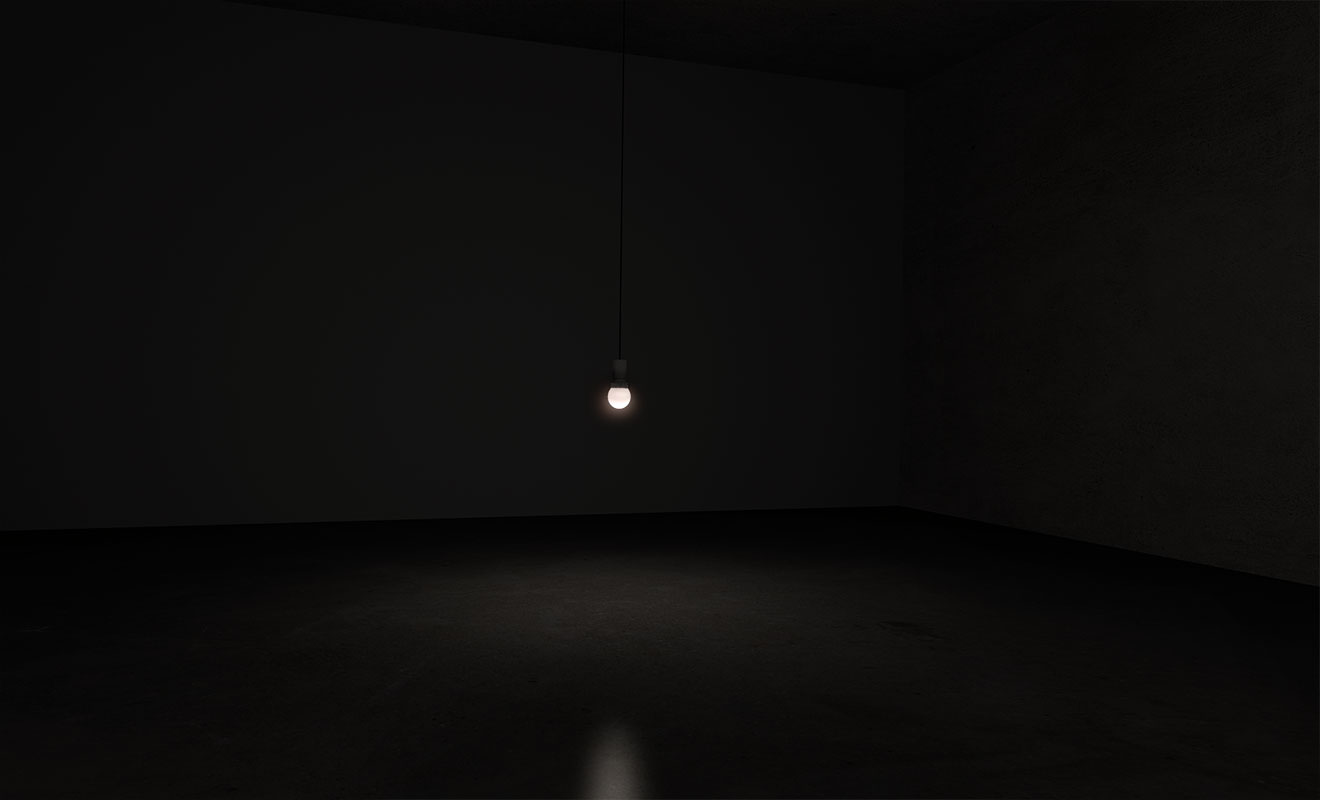
The installation, The Invention of the Ship Was Also the Invention of the Shipwreck 2012, began as a collection of trailers from movies that depicted visions of the apocalypse. Played back-to-back, they create a video just over an hour in length. I then played the video back on a CRT monitor placed face down on the floor within a room-sized camera obscura. Initially the room appeared to be pitch black. But as the viewer’s eye adjusted to the light one could make out a thin horizon of pulsating light created by the curvature of the screen on the floor projected on the back wall.

The Invention of The Ship Was Also the Invention of the Shipwreck, 2012

Mutually Assured

Mutually Assured

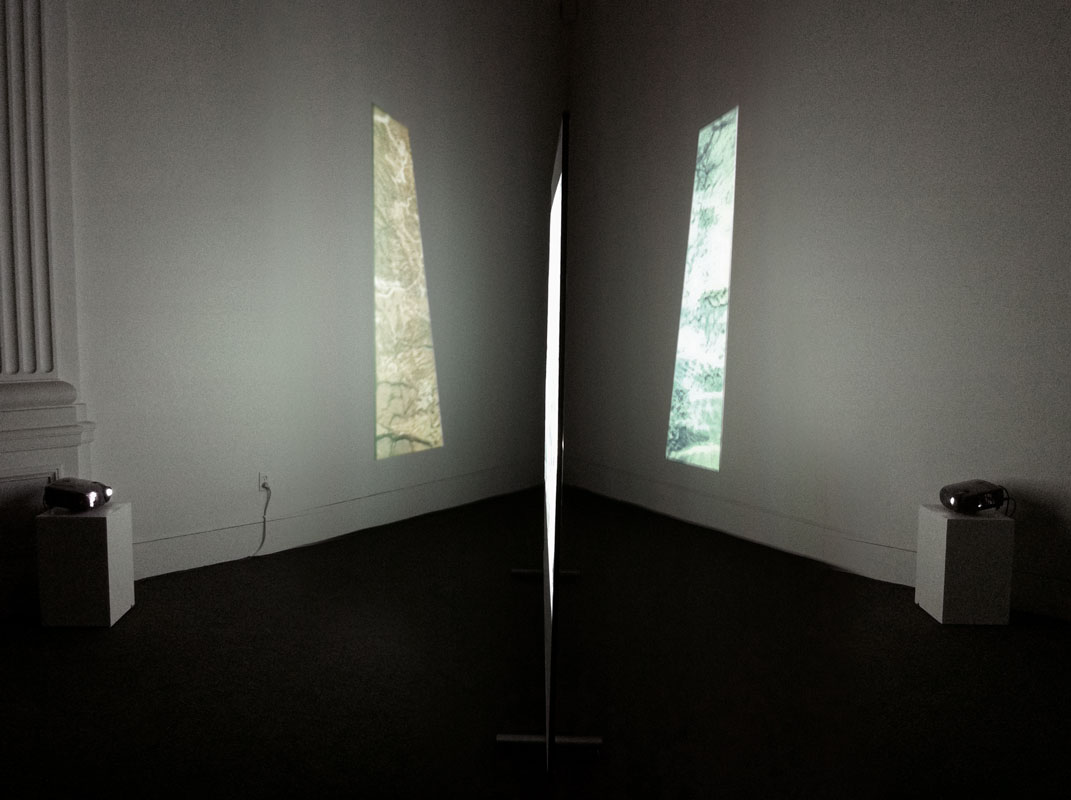
I collected the coordinates of all of the nuclear bombs detonated on American soil and choreographed a tour of the sites in Google earth in chronological order. The first video loop is a screen capture taken directly from Google earth. The second video loop is mirrored and color inverted. The two videos are played back directly onto the same surface from opposing sides. Played in perfect alignment, the videos attempt to cancel one another out; projecting a single white rectangle.

Mutually Assured

Long Exposure Series

Long Exposure Series

The long exposure photographs were taken from a live animation using Google Earth. The choreography documents the series of scars in the earth left by nuclear detonations within The Nevada Test Site. The camera zooms and pans, tracing the temporo-geographic record beginning with ‘Abel’ in 1951 and ending with the last US nuclear test, Divider in 1992. The camera faces the computer screen while I navigate through each series of the nuclear weapons test. The number of detonations in each Series determines the length of exposure, approaching total whiteout at two minutes. The length of exposure ranges from under thirty seconds for the Ranger Series 1951 that saw five detonations to four minutes for the Storax Series 1962-1966.

Long Exposure Series

Nebula Series

Nebula Series

Using techniques developed by NASA I collected the ‘stardust’ from material that fell to earth from the comet Swift-Tuttle. Every orbit brings the comet closer to the Earth. Swift Tuttle has been described as ‘the single most dangerous object known to humanity.’ I made paintings made from material I collected on microscope slides. Each painting contains cosmic & terrestrial material and is constantly evolving while in contact with Earth’s air in a process of oxidization; giving the work both a life and a kind of eventual death.

Nebula Series